
ARTIST STATEMENT
First Steps (2017)
This project was born in my spare time, developed independently in the open, and evolved at the pace of a turtle. Countless public drafts and serene long walks have shaped it into its present state, akin to a therapeutic exercise.
The project's lines of code first appeared online in November 2017, four months after the summer debut of walking and photographing. Since the beginning, the creative process was intuitively, leisurely, or swiftly, from time to time, offline or online. Until it was terminated with an emphasis on narrative writing, visual storytelling retrospectively, artist's book formatting, and public timestamps.
Below is the HTML code of a Frequently Asked Questions webpage, preserved exactly as written. Note the optimistic "5 year lifespan" — the A Walk, A Day art project ultimately spanned eight years. The project outlived its intended lifespan because survival itself kept being deferred — each asylum appeal extending the legal limbo that sustained the walking practice.

The three-bar symbol ≡, synonymous with the two-way street sign ↔, piqued my interest as an indicator of logical equivalence and the monetary unit of a currency on the Ethereum blockchain.
Technical Start-up (2021)
The page listing answers to 'WHEN, WHY, HOW, WHERE, WHO', titled FAQ | A WALK≡A DAY, was eventually migrated from my personal site at daqhris.com/awalkaday to an independent open-source project. The art project is structured like an organization on GitHub where all the sites built under the umbrella of awalkaday found a safe shelter.
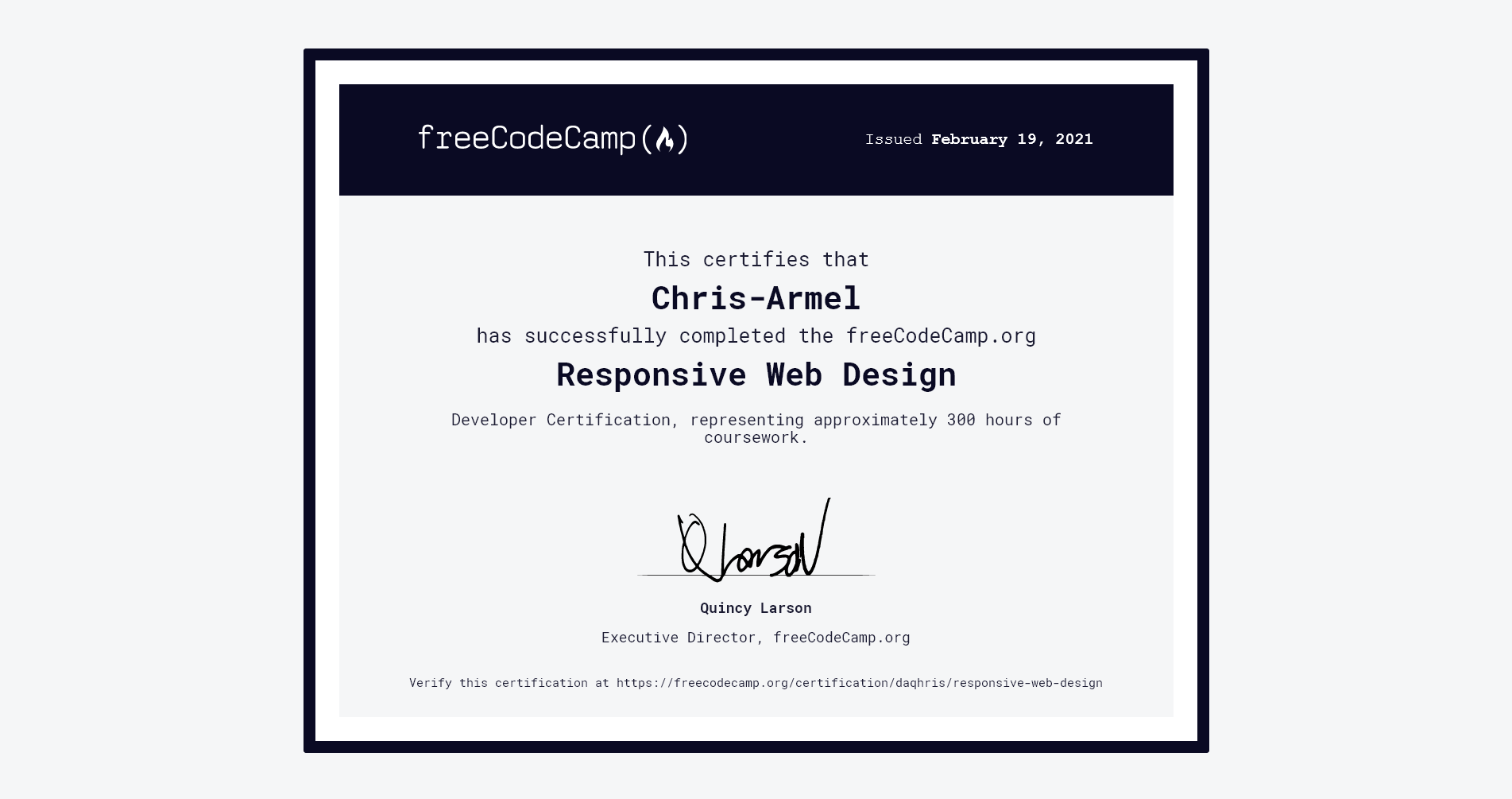
The awalkaday building blocks became once again the focus of my geeky attention and camera lenses from May 2021 onwards. That was right after receiving a developer certification from web coding classes, taught at freeCodeCamp.org, elongated into the timeframes of Aug-Oct 2016 and Dec 2020-Feb 2021.
This book displays a mix of texts copied and modified from about.awalkaday.art — an online page as old as the project's earliest footprints — with poetic writings narrating a 'crème de la crème' artwork, which is illustrated by evocative awalkaday photographs.
Its pages tell the tale of a human wanderer, portray traces of what was seen, felt, done, and lived from an objective perspective, and also hint at what has come to pass.
Memory Work (2024)
Peering into photographs devoid of humans, combing through scattered data trails, cleansing away trauma by crying were a weekly occurrence when recalling shattered memories during a life review at the start of 2024.
Traveling back in my mind's timeline, against my brain's resistance, was made a breeze by the patronage of a British artist and theatre-maker who provided rent-free housing on the hilltop of an avenue honoring Mount Kemmel in Brussels, at a flat overlooking the Park of Forest where rose up inspiration, for nearly a year and a half (2023-2025).
For an accurate time-stamped record of the book's drafts, or an analysis of my public edits scribbled down in git commits, please visit the source code repository. A visual chart showing additions and deletions of encoded texts, on a weekly basis and over a long time window, is available here.
Writing Oneself, Third Person (2025)
Most of this book is written in the third person, referring to Chris-Armel, daqhris, he or his roles — somehow no trace of the family name Iradukunda. It is not stylistic affectation, rather a necessary writing method decoded in four ways below:
i-Protection: Eight years of walks compress years of financial precarity, rejection letters, awareness of being the 'other' in public space, threat attack mitigation, exile's social isolation, zero employment contract, healthcare access denial, power-abusers retribution, homelessness, hypervigilance, uncertain future, etc. First person requires reliving. Third person allows recording.
Objectivity Under Scrutiny: As an immigrant whose belonging rights are a subject of recurring debates, my subjective testimony is often suspect, silenced or surveilled. Immigration 'interviews' were tainted by a hostile assumption of faking suffering for sympathy gain. Third person borrows the authority of the binary archive spread around third-party networks that don't ask to be believed; they simply are.
Archival Consciousness: Though forced to interrupt studies in computer engineering, I built an infrastructure for my artworks to reach all ports of the cybernetic universe on digital rails. This work is designed to outlive me across long-lasting and neutral systems, such as decentralized storage. These computing systems speak in third person. I match their voice.
Memory's Limitations: I cannot reliably recall all memories or resurface all snapshots. Some periods are fragmentary, obscured by trauma or time. Photographs and timestamps contribute what memory cannot naturally. Third person acknowledges this gap between experience and evidence.
The artist book's literary, cultural, political precedents which are colored by resembling stylistic traits are:
Julius Caesar wrote "Commentarii" about his military campaigns in third person (self-documentation and self-mythologizing). Centuries later, Charles de Gaulle followed suit, "Mémoires de guerre".
Henry Adams wrote "The Education of Henry Adams" in third person to examine himself as case study, objectified for analysis.
W.G. Sebald's narrators observe themselves observing, creating dreamlike distance.
Gertrude Stein ventriloquized herself through 'Alice B. Toklas'.
W.E.B. Du Bois's 'double consciousness': the necessity of seeing oneself through the gaze of systems that mark you as other. As an African exiled in Europe, I exist in this dual consciousness — my lived experience and the bureaucratic third-person that defines my (non-)status.
Afrofuturism's archival urgency: the practice of creating permanent records when dominant systems erase or distort one's existence.
The omniscient narrator is not neutral. They speak as a system that tracked my existence, then compiled to narrate on my terms. Where the first person appears, it marks moments of direct address. These ruptures, of breaking the archival frame, are intentional.
FRONT-1
Last updated